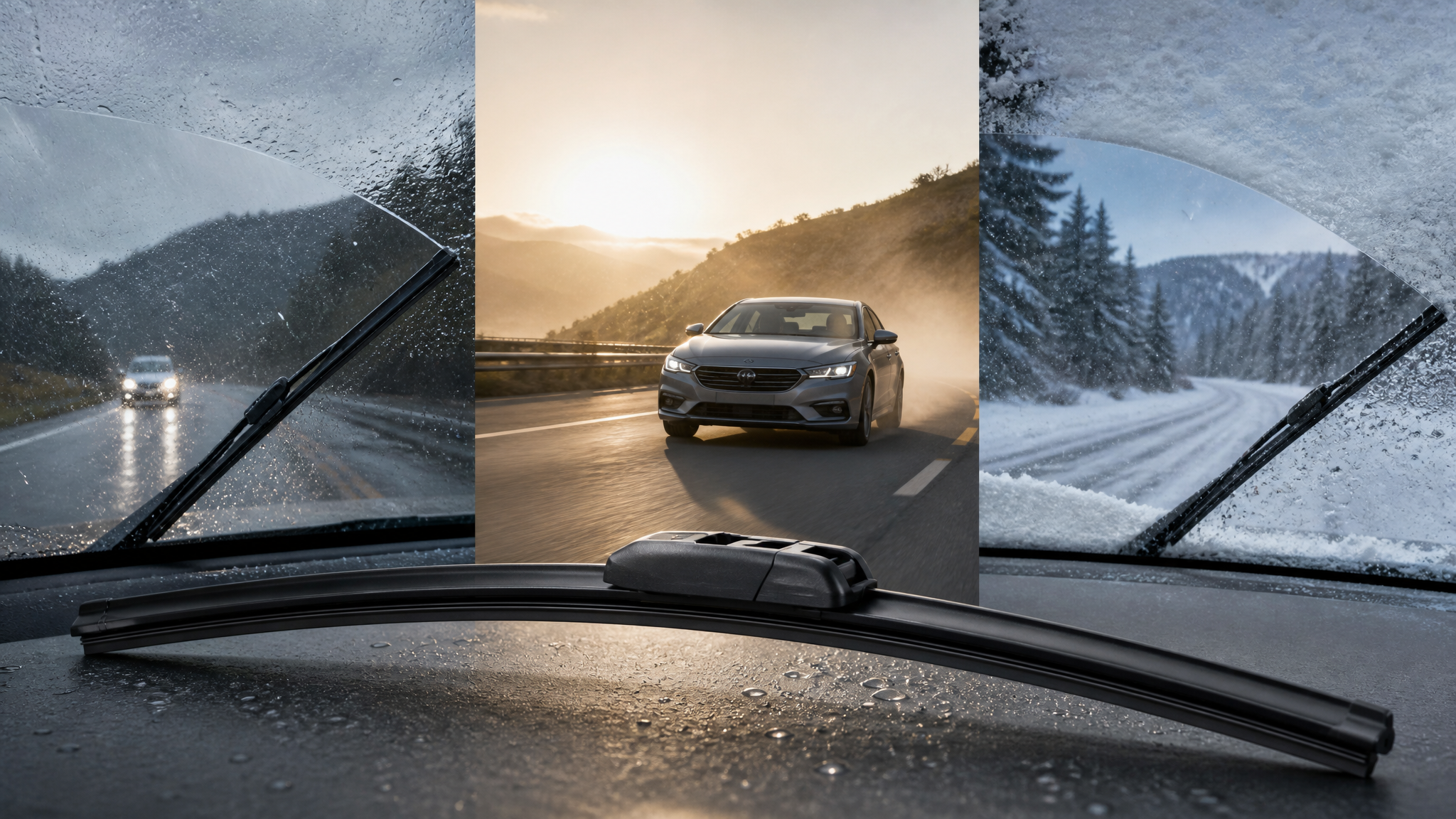
A wiper blade is often treated as a standard replacement part, but its real performance depends heavily on the driving environment. Heavy rainfall, high temperatures, snow, road dust, and frequent stop-and-go traffic can all affect wiping quality, rubber durability, and driver visibility.
For distributors, importers, and private-label brands in the automotive aftermarket, choosing the right wiper blade solution is not only about vehicle fitment. It is about matching product performance with local weather, road conditions, and customer expectations.
As a professional wiper blade manufacturer, we work with customers in different markets to develop practical product ranges for a variety of driving conditions. Here are several factors to consider when building a more suitable wiper blade program.
1. Heavy Rainfall and Tropical Climates
In regions with frequent rain, drivers rely on consistent and streak-free wiping performance. Sudden downpours, high humidity, and prolonged daily use place greater demands on the rubber strip, frame stability, and windshield contact pressure.
For these markets, buyers should focus on natural rubber or premium rubber compounds with good flexibility and water-clearing ability. A well-designed beam wiper blade can provide even pressure across the windshield, helping reduce streaks and missed areas during heavy rain.
It is also important to consider vehicle coverage. A multi-fit wiper blade with multiple adapters can help distributors serve a wider range of popular vehicles while reducing inventory complexity.
2. High-Temperature and Strong-UV Environments
Hot climates can accelerate rubber aging. Long exposure to sunlight, heat buildup inside parked vehicles, and dry wind can cause ordinary wiper rubber to harden, crack, or lose flexibility over time.
For markets with high temperatures and intense UV exposure, UV-resistant wiper rubber and stable frame materials are essential. Silicone-coated or specially treated rubber options can improve resistance to heat and ozone while supporting smoother wiping performance.
For importers and brands serving these regions, product durability should be discussed together with packaging, storage, and expected replacement cycles. The right solution can help reduce after-sales complaints and improve customer confidence in the product range.
3. Snow, Ice, and Cold-Weather Driving
Cold weather creates a different set of challenges. Low temperatures can reduce rubber flexibility, while snow and ice may place extra stress on the blade structure and windshield contact area.
A durable winter wiper blade should maintain stable wiping performance in low temperatures and resist snow buildup around the frame. In some markets, a covered or reinforced design may be more suitable for vehicles regularly exposed to snow, slush, and freezing conditions.
Before selecting a cold-climate solution, buyers should review the main vehicle types in their market, typical winter temperatures, and whether drivers commonly use seasonal replacement products.
4. Dusty Roads and Dry Driving Conditions
In dry, dusty, or sandy areas, fine particles can accumulate on the windshield and wiper edge. If the blade material or design is not suitable, this may lead to noise, uneven wiping, and faster wear.
For these environments, a smooth and wear-resistant rubber refill is important. Proper blade pressure and aerodynamic design can also help maintain stable contact at different driving speeds. Drivers should be encouraged to use washer fluid when possible, as wiping a heavily contaminated dry windshield can damage both the glass and the wiper edge.
For distributors, offering a balanced range of conventional wiper blades, beam blades, and replacement refills can help address different vehicle ages and customer price levels.
5. Urban Stop-and-Go Traffic
City driving may not always involve extreme weather, but frequent use can still shorten wiper life. Dust, pollution, oily road film, and repeated intermittent wiping can affect visibility, especially during light rain or at night.
For urban markets, quiet operation and clean wiping are often key selling points. A quality flat wiper blade with consistent pressure distribution can help minimize chatter and improve driver comfort. Clear fitment information and easy installation are equally important for retail customers and workshops.
Building a Market-Focused Wiper Blade Range
There is no single wiper blade that is ideal for every market. The best product program considers local climate, vehicle population, road conditions, price positioning, and the level of aftermarket service required.
At So Good, we support OEM and private-label projects with a wide range of windshield wiper blades, including beam wipers, conventional wipers, hybrid designs, rear wipers, and multi-fit solutions. With more than 22 years of manufacturing experience, we help customers select practical products, manage SKU coverage, and develop packaging that fits their market strategy.
Whether you are expanding an existing car accessories portfolio or building a new wiper blade brand, the right driving-condition strategy can help you offer better performance, reduce inventory risk, and create stronger long-term value for your customers.
Looking for wiper blade solutions that fit your market conditions? Contact our team to discuss vehicle coverage, product options, and private-label support.
Post time: Oct-23-2026